EXPLORE OUR HIGHLY-RATED AIR PURIFIERS. Shop Now →
Buyer's Guide

Why Consumer Air Purifiers Fall Short in Professional Settings

The price tag looks appealing. The reviews are strong. So why shouldn't your dental practice, medical facility, or commercial space use the same air purifier you'd buy for your living room? Understanding five critical differences helps facility managers and practice owners make informed decisions.

Trusted by 55,000+ Healthcare Facilities
UL Listed ETL Certified CARB Certified
Ships to US & Canada
The Core Issue

Different Environments, Different Requirements

Consumer air purifiers are engineered for homes—environments with predictable air quality challenges, moderate use patterns, and no regulatory requirements. Healthcare and commercial environments face fundamentally different demands.

Understanding these differences helps facility managers and practice owners make decisions that protect patients, staff, and operations.

Key Differences

Five Critical Differences

01

Filtration vs. Germicidal Technology

Consumer Approach

Captures and contains particles in filters. Pathogens remain viable until filter disposal.

Professional Approach

Captures particles AND destroys pathogens with UV-C germicidal light (254nm wavelength). Defense in depth.

Why it matters: Dental aerosol-generating procedures and medical environments create pathogen loads that benefit from active disinfection, not just containment.

02

Duty Cycle & Durability

Consumer Approach

Designed for residential use—8-12 hours daily, intermittent operation, lower stress on components.

Professional Approach

Engineered for continuous 24/7 operation. Commercial-grade motors, reinforced components, extended service life.

Why it matters: Equipment failure in a dental operatory or exam room disrupts patient flow, creates liability exposure, and damages reputation.

03

Multi-Stage Filtration

Consumer Approach

Typically 2-3 stages: pre-filter, HEPA or proprietary filter, possibly carbon.

Professional Approach

5 stages addressing particles, VOCs, odors, and pathogens through multiple complementary technologies.

Why it matters: Healthcare environments face diverse contaminants—from aerosols to chemical vapors to biological hazards. Comprehensive protection requires comprehensive technology.

04

Warranty & Support

Consumer Approach

1-2 year warranties. Consumer support channels. Self-service returns and replacements.

Professional Approach

5-year warranties reflecting expected commercial lifespan. Professional support teams who understand healthcare environments.

Why it matters: A 1-year warranty signals expected lifespan. Professional equipment built for commercial use backs that with extended coverage.

05

Validation & Certification

Consumer Approach

AHAM Verified (consumer testing standard), CARB compliance, Energy Star. User reviews and consumer publications.

Professional Approach

ETL, UL, CSA certifications. Independent clinical validation from professional organizations. Testing under healthcare-relevant conditions.

Why it matters: Consumer ratings measure home performance. Healthcare environments need validation from clinical testing organizations who understand professional requirements.

Total Cost of Ownership

The True Cost Calculation

Consumer air purifiers often appear more affordable. A closer look at total cost of ownership tells a different story.

Replacement Cycles

Consumer units last 2-3 years under commercial use. Professional equipment lasts 5-7+ years.

Proprietary Filters

Some consumer brands lock you into $400-600/year filters. Standard HEPA runs ~$150/year.

Downtime Costs

A broken air purifier in an operatory means cancelled appointments and lost revenue.

Warranty Extensions

Consumer warranties require paid extensions. Professional equipment includes comprehensive coverage.

5-Year Cost Comparison

Initial Purchase Consumer: $500-1,000
Replacement Unit (Year 3) Consumer: $500-1,000
Filters (5 years) Consumer: $1,000-2,500
Warranty Extension Consumer: $100-200
Consumer Total $2,100-4,700
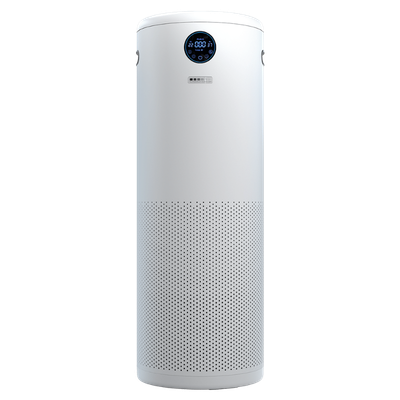
JADE 2.0 Purchase $849
Filters (5 years) ~$750
5-Year Warranty Included
SCA Total ~$1,600
Is Professional-Grade Right for You?

Who Needs Professional Air Purification?

Dental Practices

Aerosol-generating procedures create pathogen-laden air requiring active germicidal treatment.

Medical Facilities

Exam rooms and waiting areas serve immunocompromised patients where air quality is clinical, not comfort.

Veterinary Clinics

Surgical suites face similar aerosol and odor challenges requiring professional-grade solutions.

Commercial Facilities

Gyms, schools, offices operating 12+ hours daily need equipment built for commercial duty cycles.

Independent Validation

What the Clinicians Report® Found

When dental professionals independently evaluated Surgically Clean Air products—without manufacturer influence or funding—the results spoke for themselves. This is the kind of professional validation that consumer product testing simply doesn't provide.

91%
Rated Excellent or Good
82%
Would Incorporate
Frequently Asked Questions

Comparison Questions

Why shouldn't I use a consumer air purifier in my dental practice?

Consumer air purifiers are designed for residential use patterns (8-12 hours daily) and lack UV-C germicidal capability to neutralize pathogens. Dental practices generate aerosols from procedures that require active pathogen destruction, not just filtration. Consumer units also carry 1-2 year warranties versus 5 years for professional equipment, reflecting expected lifespan differences.

What is the difference between consumer HEPA and professional-grade HEPA-Rx?

Standard consumer HEPA filters capture 99.97% of particles at 0.3 microns. Professional-grade HEPA-Rx filters capture 99.99% at 0.1 microns—three times smaller. This matters for healthcare environments where ultrafine virus-carrying aerosols and the smallest allergen fragments need to be captured.

Do consumer air purifiers have UV-C germicidal technology?

Most consumer air purifiers (Dyson, Molekule, BlueAir) do not include UV-C germicidal technology. They rely solely on filtration to capture particles. Professional-grade systems like Surgically Clean Air include 254nm UV-C chambers that destroy the DNA/RNA of captured pathogens—providing an additional layer of protection beyond filtration alone.

What is the total cost of ownership for consumer vs professional air purifiers?

Consumer air purifiers typically last 2-3 years under commercial use, require proprietary filter replacements ($200-400/year), and carry short warranties requiring paid extensions. Professional units last 5-7+ years, use standard HEPA replacements (~$150/year), and include 5-year warranties. When factoring replacement cycles and downtime costs, professional equipment often has lower total cost of ownership.

How do I know if I need professional-grade air purification?

Professional-grade air purification is recommended for: dental practices performing aerosol-generating procedures, medical facilities serving immunocompromised patients, veterinary clinics with surgical suites, and commercial facilities operating 12+ hours daily. If air quality impacts patient safety, regulatory compliance, or continuous operation is required, professional-grade is the appropriate choice.

Get Expert Guidance

Ready to Evaluate Professional Options?

Our team can help you assess your facility's specific needs, recommend appropriate solutions, and provide detailed specifications.

See Our Products

5-Stage professional-grade air purification starting at $849. Built for healthcare, trusted by 55,000+ facilities.

Request a Quote

Stay Fresh!

Want to keep up to date with best practices for air management?

Subscribe to our newsletter!