
Indoor Air After an Industrial Plastics Fire: What Residents, Schools, and Clinics Should Know
Shelter-in-place orders lift well before indoor air is actually clean. Here's what plastics fires put into your air, why your HVAC isn't enough, and the priority list for homes, schools, and clinics in the plume zone.
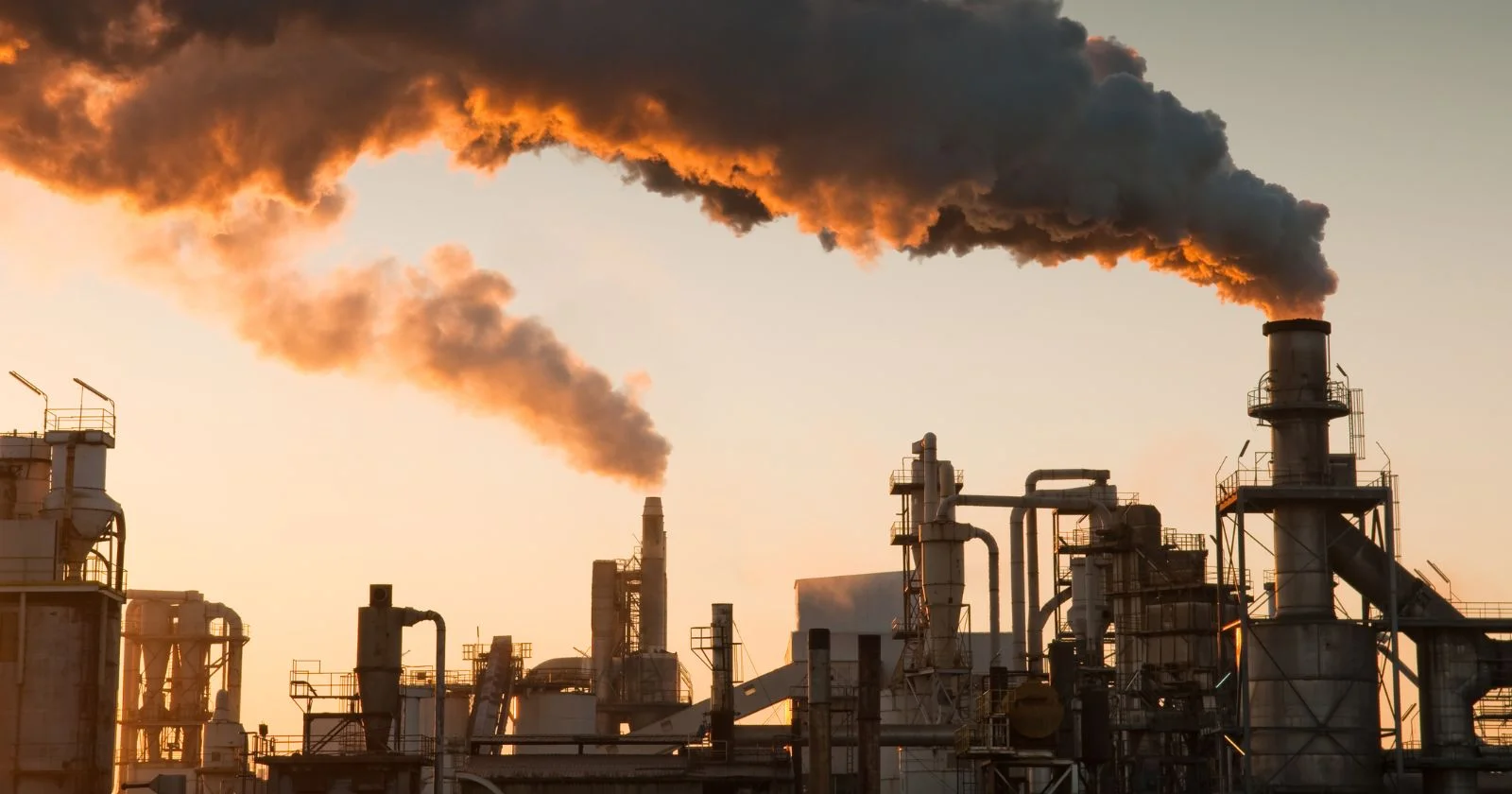
When the shelter-in-place lifts after an industrial fire, the air outside has usually cleared enough to be safe to walk through. The air inside your home, school, or clinic typically hasn't. Particulate matter and volatile organic compounds (VOCs) from the smoke have already infiltrated through windows, doors, soffits, and HVAC intakes — and they settle into soft surfaces and recirculate through your filters for 48 to 72 hours after the visible plume is gone.
This is the part most people miss. The TV coverage ends when the fire is out. The actual indoor-air work starts then.
What plastics fires put into your air
Burning plastics release a mix of products that depend on the specific resins and additives involved. In most industrial plastics fires you can expect, at minimum:
- Fine particulate matter (PM2.5 and smaller). The black smoke itself. These particles bypass your nose and upper airway and reach deep into the lungs. Standard HVAC filters capture some of them; HEPA-grade filtration captures essentially all of them.
- VOCs. Depending on the plastics involved, this can include styrene, benzene, formaldehyde, toluene, and other hydrocarbons. These are gases — particulate filters don't touch them. They require activated carbon to capture.
- Combustion byproducts. Hydrogen chloride (if any PVC or halogenated plastics were involved), carbon monoxide, and trace heavy metals depending on additives.
- Settled residue. Soot particles that come to rest on surfaces, in carpets, and on soft furnishings. These get re-suspended into the air every time someone walks through or runs a vacuum without a HEPA-rated filter.
The exact mix matters less than the response. Treat any industrial fire smoke event as a combined particulate + VOC + settled-residue cleanup, not just a smoke-clearing event.
Why your HVAC system isn't enough
Most residential HVAC systems run a MERV 8 to MERV 11 filter — sized to capture pollen, dust, and pet dander, not the sub-micron particulate from a combustion event. Even MERV 13, which most HVAC systems aren't designed to support without static-pressure penalties, captures roughly 85% of PM2.5 under ideal conditions.
The bigger issue is gas-phase contaminants. Standard HVAC filters of any MERV rating capture zero VOCs. VOCs are gases; particulate filters work mechanically on physical particles. Removing gases requires activated carbon, which residential HVAC systems almost never include.
So if you're relying on your central HVAC alone to clean the air after a plastics fire, you're removing maybe a quarter of the particulate and none of the gases. The VOCs persist and continue off-gassing from absorbed surfaces for days.
What to do in your home — in priority order
- Replace your HVAC filter today. The one in your unit right now is loaded with smoke residue and re-emitting it every time the fan runs. Replace with the highest MERV rating your system supports.
- Run portable HEPA + activated-carbon units in the rooms you occupy. Bedrooms first, then living areas. Activated carbon is the non-negotiable here. HEPA-only units (without a meaningful carbon stage) will clear the visible particulate but leave the VOCs.
- Keep windows closed for another 48 to 72 hours. Even after the air outside "looks fine," ground-level VOC concentrations stay elevated downwind for days. Outdoor air exchange right now reintroduces what you're trying to remove.
- Clean hard surfaces. Wipe with damp microfiber. Don't use a feather duster — it re-suspends. Don't vacuum without a HEPA-rated filter — same problem.
- Wash soft furnishings. Bedding, curtains, removable cushion covers, and any clothing exposed during the shelter-in-place. Soft furnishings adsorb VOCs and re-emit them slowly for weeks if not laundered.
- Pay attention to symptoms. Headache, throat irritation, eye irritation, or coughing that persists indoors is your body telling you the air isn't clean yet. If symptoms continue after 72 hours, contact a healthcare provider — and consider professional air-quality testing.
For schools and clinics in the plume zone
Schools and clinics have a higher bar than residential. You have occupants who didn't choose to be in the building, vulnerable populations (children, immunocompromised patients), and in the clinic case, regulatory air-quality obligations.
The benchmark for "safe to reopen" isn't visual inspection. It isn't the absence of smell. It's measurement. Specifically:
- PM2.5 measured at multiple points — not just near the HVAC supply, but in the corners and lower-circulation zones where particulate settles. Target: ambient outdoor levels or below.
- VOC testing. A handheld PID (photoionization detector) or lab-grade air sampling for the specific compounds expected from the burned materials. Target: pre-incident baseline.
- Air-change rate verification. ASHRAE recommends 6+ air changes per hour (ACH) for occupied clinical spaces; 12+ for surgical suites. After a smoke event, you want to verify you're actually hitting those numbers with current filter loading, not the design spec.
If your facility doesn't already have portable HEPA + carbon units positioned in operatories, exam rooms, or classrooms, this is the event to deploy them. The cost of a single unit is trivial compared to the liability of reopening a space that doesn't test clean.
For employers near the site
OSHA's general duty clause requires employers to provide a workplace free of recognized hazards. Indoor air contamination from a nearby industrial fire is a recognized hazard for the duration that VOCs and particulate remain elevated. If your workplace is within the plume zone and you're calling employees back in, document the air-quality state — particulate measurement at minimum, VOC testing if any chemically-sensitive workers report symptoms.
Most employers will get away with doing nothing. The ones who don't are the ones whose employees later develop persistent respiratory complaints and trace them back to this week. The documentation isn't expensive. The absence of it can be.
The honest summary
Industrial fires affect indoor air longer than the news cycle suggests. The 90-second TV segment ends when the visible smoke clears; the actual cleanup window inside homes and buildings is two to seven days, and longer for fabric and porous surfaces.
You don't need expensive equipment to handle most residential cases — good portable HEPA + carbon units, fresh HVAC filters, closed windows, and a week of patience will get most homes back to baseline. For schools, clinics, and workplaces, you need measurement, not assumption, before you can call the air clean.
About Surgically Clean Air. SCA designs and manufactures commercial-grade air purification systems for dental, healthcare, and commercial environments. Our 5-stage HEPA-Rx + UV-C+ filtration is used in 55,000+ healthcare facilities. If you're assessing indoor air quality after a smoke event and want to talk through your options, our team is available at (877) 440-7770 or customercare@surgicallycleanair.com.